




Learn how to accurately size your home backup battery with our professional 4-step guide. From calculating critical loads to understanding LiFePO4 Depth of Discharge, we simplify the math for you.
What Size Battery Do I Need for a Home Backup Power System?
A complete guide to calculating your ideal battery capacity—avoid overspending while ensuring reliable backup power during outages.
As power outages become more frequent and homeowners seek greater energy independence, selecting the right battery size for your backup system is crucial. Choose incorrectly, and you may find yourself without power when you need it most—or waste thousands of dollars on unnecessary capacity.
Key Insight: Your battery should be perfectly sized—not too small to leave you vulnerable, not too large to drain your budget. This guide provides the exact calculations professional installers use.
We will walk you through four key steps to determine your ideal battery size and help you choose between common capacities: 5kWh, 10kWh, and 15–20kWh.
Step 1: Identify Your Essential Loads (Critical Circuits)
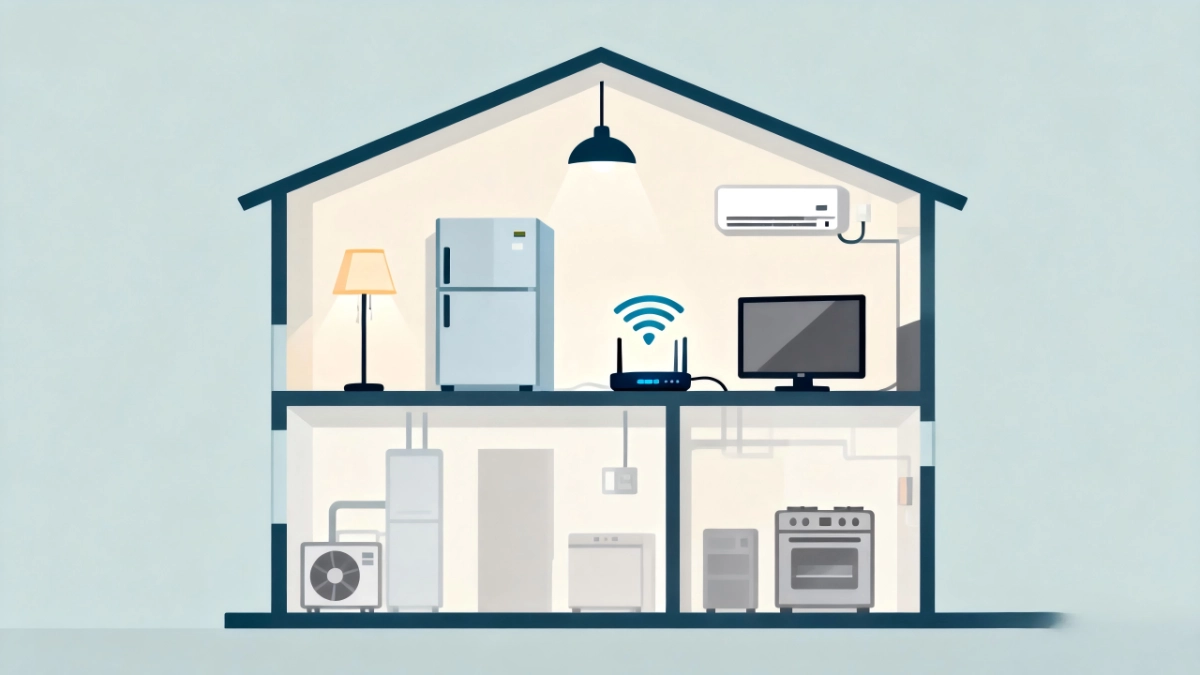
Begin by asking: "What absolutely must keep running during a power outage?"
TYPICAL CRITICAL LOADS
- Refrigerator & freezer
- Essential lighting
- Wi-Fi router & devices
- Security & safety systems
- Medical equipment
EXCLUDE INITIALLY
High-wattage loads like HVAC systems, ovens, electric water heaters, and clothes dryers. These dramatically increase battery requirements.
Step 2: Calculate Daily Energy Use (kWh)
EXAMPLE: THE SMITH FAMILY
- Refrigerator: 1.2 kWh/day
- Lighting: 0.6 kWh/day
- Internet & devices: 0.3 kWh/day
- Other essentials: 0.4 kWh/day
Daily total: 2.5 kWh/day
2-day backup requirement: 5.0 kWh
Step 3: Account for Battery Depth of Discharge (DoD)
- Lead-acid batteries: ~50% usable capacity
- LiFePO4 batteries: 80–95% usable capacity
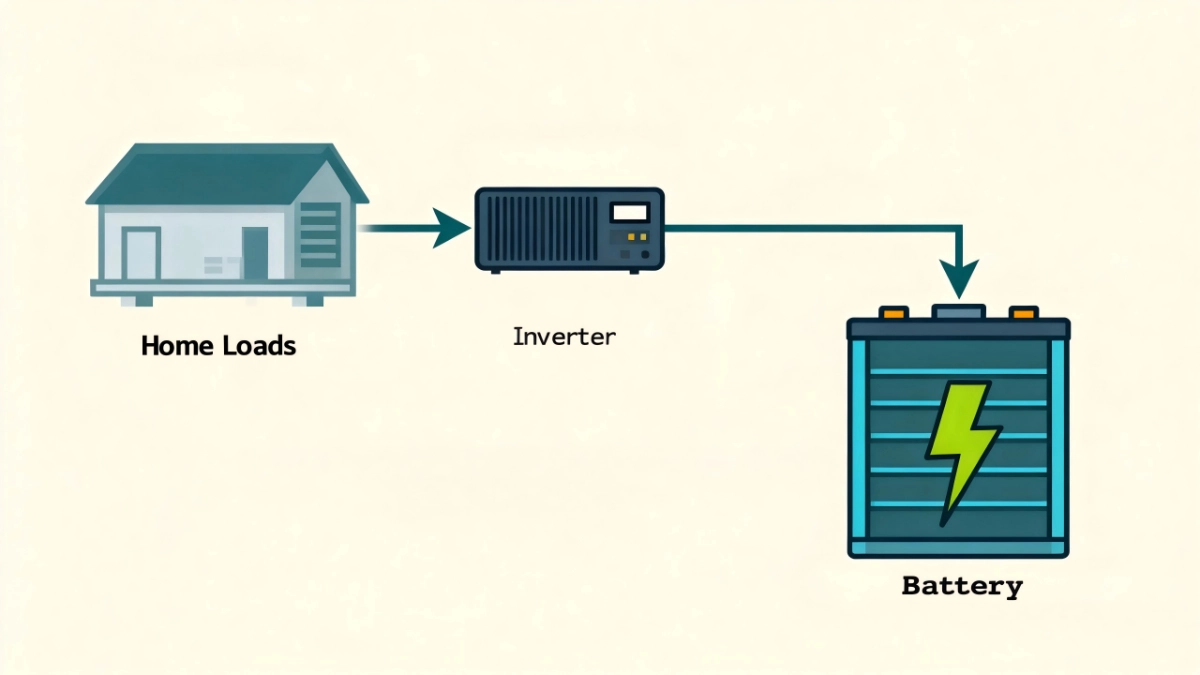
Calculation: Required usable energy ÷ DoD = Battery size needed
5.0 kWh ÷ 0.90 = 5.56 kWh battery size required
Step 4: Determine Backup Duration
With solar panels: Smaller battery may suffice since daytime charging is available.
Without solar: Your battery must store ALL energy needed until grid power returns.
2-day outage backup requirement: ≈ 11.1 kWh
(5.56 kWh × 2 days of autonomy)
Home Backup Battery Reference Guide
| Battery Size | Usable Energy (90% DoD) | Use Case | Estimated Cost |
|---|---|---|---|
| 5 kWh | 4.5 kWh | Basic essentials for 12–24 hours | $3,000 – $5,000 |
| 10 kWh | 9.0 kWh | Most families' critical loads for 1–3 days | $5,500 – $8,500 |
| 15–20 kWh | 13.5–18 kWh | Whole-home backup or medical equipment needs | $8,000 – $14,000 |
*Estimated costs include professional installation, inverter, and basic electrical upgrades. Actual prices vary by region, equipment brands, and installation complexity.
Why LiFePO4 Batteries Dominate Home Backup Systems
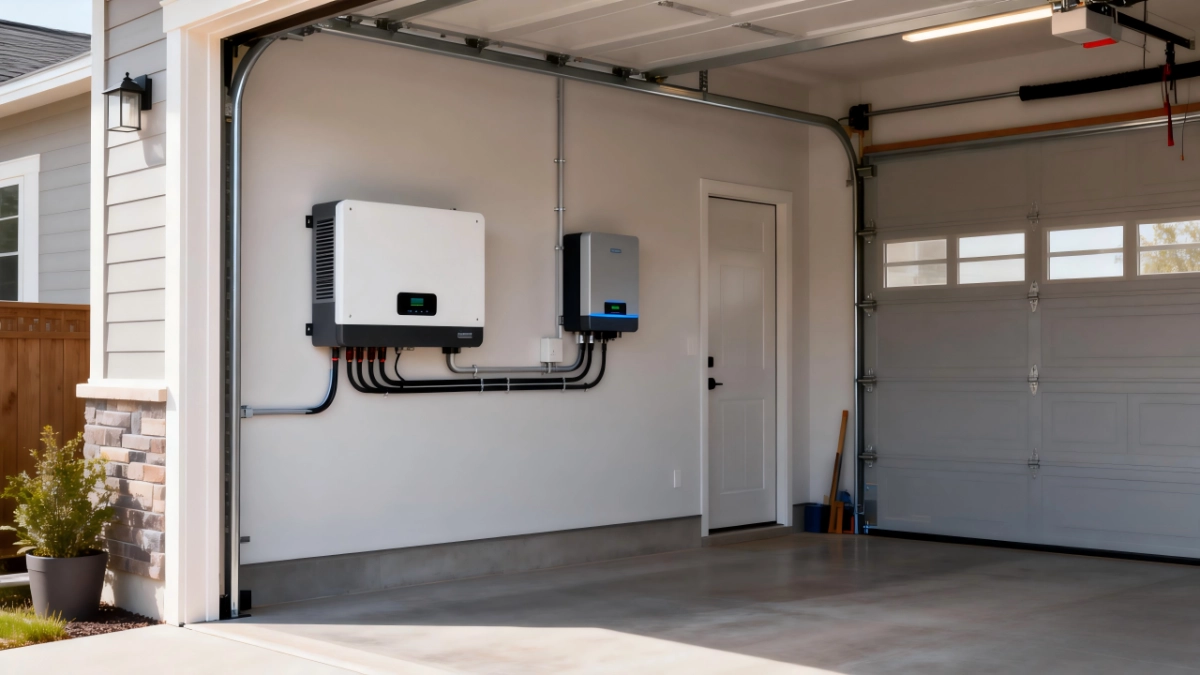
- 6,000+ cycles – Far outlasts lead-acid
- 95–98% efficiency – Minimal energy loss
- High safety & stability – No thermal runaway risk
- Compact & lightweight – ⅓ the size of lead-acid
- Low maintenance – No watering or equalizing
- Wide temperature range – Performs well in heat/cold
Get Your Free Professional Battery Sizing Assessment
Avoid costly sizing mistakes. Our certified energy storage experts will analyze your specific needs and provide a customized recommendation—no obligation, just professional advice.
Response within 24 hours • Customized for your home • No sales pressure
Frequently Asked Questions
1. Can one battery power my whole house?
Usually no. Most single batteries (5-10kWh) can only support essential circuits. Whole-home backup typically requires 20kWh+ capacity and intelligent load management to prioritize critical appliances.
2. Should I oversize my battery?
A 10–20% buffer is ideal for future expansion and battery health. However, significant oversizing wastes money. Consider modular systems that allow gradual expansion as needs change.
3. Does temperature affect battery performance?
Yes, extreme temperatures reduce efficiency and lifespan. LiFePO4 batteries perform best between 15°C and 25°C (59°F to 77°F). Indoor installation in conditioned spaces is recommended for optimal performance.
4. Can I mix old and new batteries?
Not recommended. Mixing batteries of different ages, brands, or chemistries can lead to uneven charging, reduced performance, and potential safety issues. Always use matched battery sets.
5. More batteries or more solar panels?
Frequent, extended outages: Prioritize battery capacity. Short outages with high electricity costs: Prioritize solar with smaller battery. Areas with time-of-use rates: Batteries alone can provide savings through strategic energy shifting.