




Explore the differences between AC-coupled and DC-coupled solar systems. Learn how each affects efficiency, battery charging, expandability, and overall performance for homes and businesses, helping installers and homeowners choose the best solar and storage solution.
AC-Coupled vs DC-Coupled Solar Systems: Which One Is Better in 2025?
As solar energy adoption accelerates in 2025, one key design question remains: Should you choose an AC-coupled or DC-coupled solar system? This comprehensive guide explains the technical differences, efficiency comparisons, cost analysis, and which option is better for your specific needs in 2025. We cover battery storage, hybrid inverters, retrofit projects, and the latest technology trends.
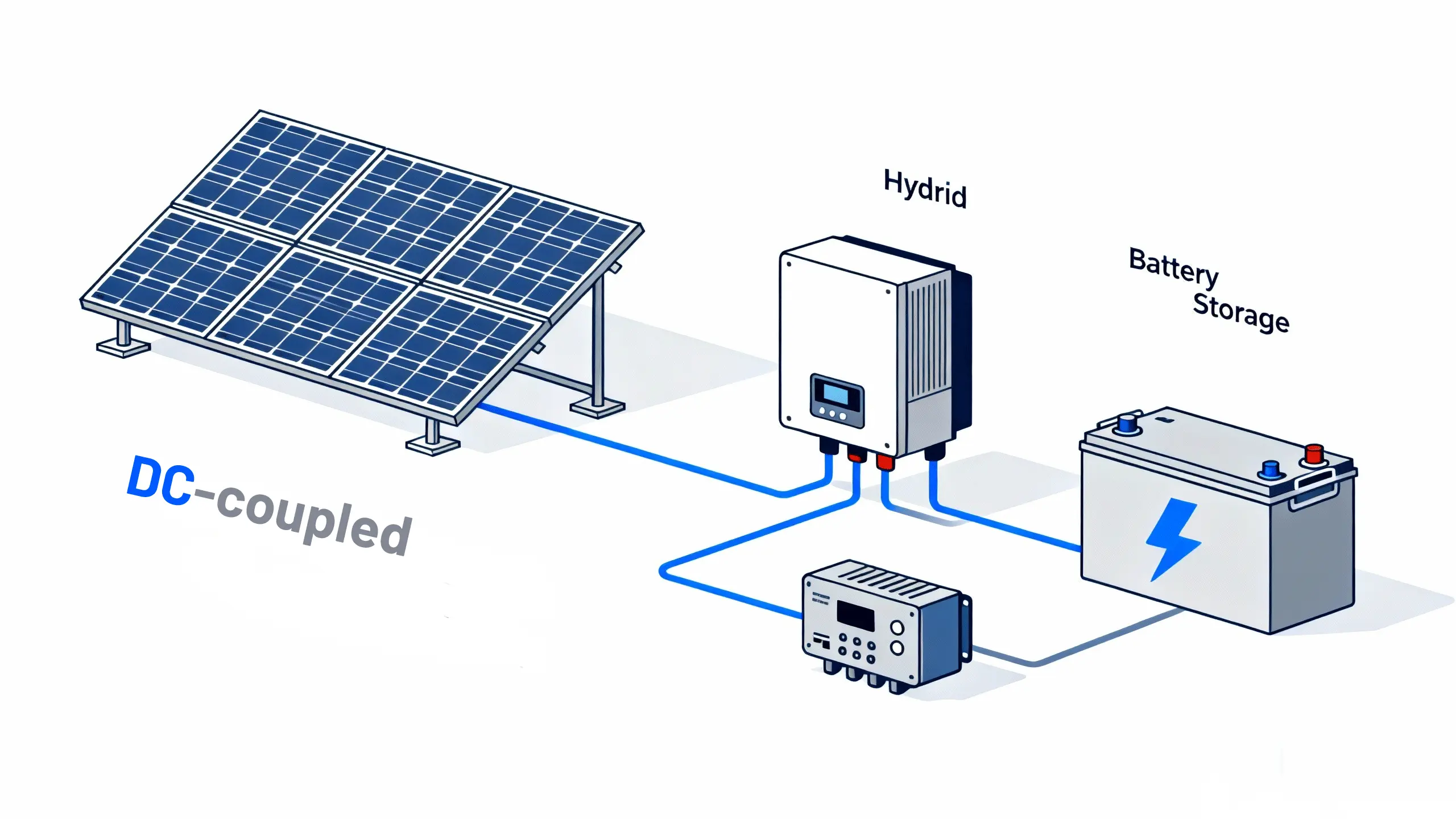
1. What Is a DC-Coupled Solar System?
A DC-coupled system directs DC (direct current) power from solar panels through a charge controller directly into battery storage. When power is needed for household use, it's converted to AC (alternating current) by a hybrid inverter. This single-conversion path makes it the traditional and highly efficient architecture for solar plus storage systems.
- ✔ Higher charging efficiency (94-97% overall system efficiency)
- ✔ Better for battery-heavy systems and daily cycling
- ✔ Works seamlessly with hybrid inverters
- ✔ Lower conversion losses during battery charging
- ✘ Less flexible for expanding existing solar systems
- ✘ Requires more upfront planning and design
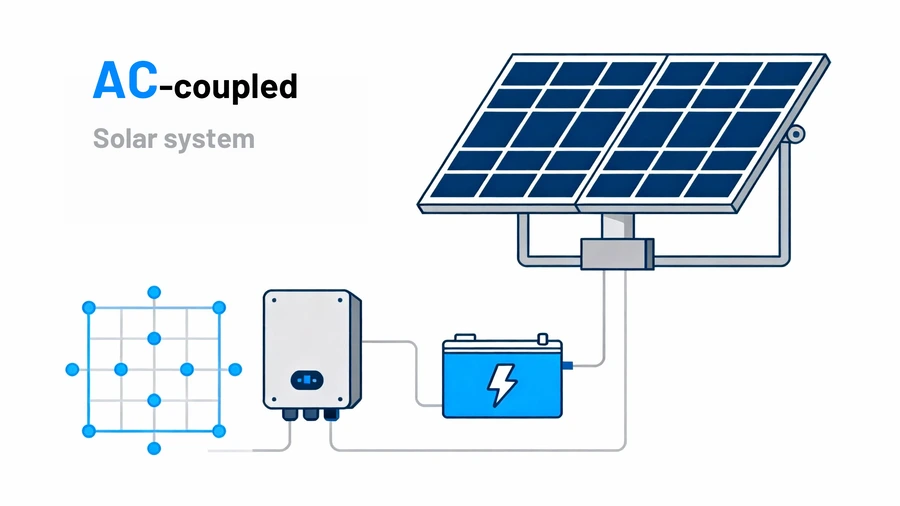
2. What Is an AC-Coupled Solar System?
An AC-coupled system converts solar DC power to AC first via a standard solar inverter, then reconverts a portion to DC to charge the battery when needed. This double-conversion architecture is particularly common in retrofit projects or systems requiring maximum flexibility and modular expansion.
- ✔ Excellent for upgrading existing solar installations
- ✔ Highly flexible and scalable for future expansion
- ✔ Compatible with microinverters and optimizer systems
- ✔ Easier to install and modify after initial setup
- ✘ Lower efficiency due to double conversion (88-92% efficiency)
- ✘ Higher conversion losses during battery charging
3. AC-Coupled vs DC-Coupled: 2025 Comparison Table
| Feature | DC-Coupled | AC-Coupled |
|---|---|---|
| System Efficiency | High (94-97%) - Single conversion | Medium (88-92%) - Double conversion |
| Battery Charging Speed | Faster, more efficient | Slower due to conversion losses |
| Installation Complexity | Moderate (requires hybrid inverter) | Low (works with standard inverters) |
| Expansion Flexibility | Limited | Excellent |
| Best Application | New hybrid/off-grid systems | Retrofits & system upgrades |
| Microinverter Compatibility | No | Yes |
4. Cost Comparison & ROI Analysis 2025
Understanding the financial implications is crucial for making the right choice. Here's a breakdown of costs and returns for both systems in 2025:
Initial Investment (Typical 10kW System with 15kWh Battery):
- DC-Coupled System: $28,000 - $35,000 (includes hybrid inverter)
- AC-Coupled System: $30,000 - $38,000 (requires additional battery inverter)
- Federal Tax Credit (2025): 30% of total system cost applies to both
Long-term Savings & ROI:
- DC-Coupled: Higher efficiency yields 5-8% more annual energy savings
- AC-Coupled: Lower maintenance costs, easier upgrades
- Payback Period: 6-8 years for both systems with current incentives
5. 2025 Technology Trends Impacting Your Choice
Several emerging technologies are changing the AC vs DC coupling equation in 2025:
- Smart Hybrid Inverters: New models offer both AC and DC coupling capabilities in one unit
- Vehicle-to-Grid (V2G): AC-coupled systems integrate more easily with EV bidirectional charging
- AI Energy Management: Advanced systems optimize based on real-time electricity rates
- Higher Voltage Batteries: DC-coupled systems benefit from 400V+ battery architectures
- Modular DC Systems: New designs offer some expansion flexibility for DC-coupled systems
6. Which One Is Better in 2025?
Both systems have distinct advantages in 2025. The optimal choice depends on your specific situation:
• Installing solar and battery storage together for the first time
• Prioritizing maximum efficiency and battery performance
• Planning an off-grid or backup-focused system
• Wanting the simplest, most integrated solution
Choose AC-Coupled If:
• Adding battery storage to existing solar panels
• Using microinverters or planning to expand system
• Need flexibility for future home energy additions
• Integrating with smart home or EV charging systems
7. Frequently Asked Questions (2025 Edition)
1. Which system charges batteries faster in 2025?
DC-coupled systems charge 15-25% faster due to fewer conversion losses. Modern DC systems can achieve charging efficiencies over 97%.
2. Can I expand a DC-coupled system later?
Yes, but with more limitations than AC-coupled. New modular DC systems in 2025 offer better expansion options than previous generations.
3. Which is better for off-grid homes in 2025?
DC-coupled systems paired with hybrid inverters generally offer higher efficiency for off-grid applications, crucial for maximizing limited solar resources.
4. Does AC coupling work with microinverters?
Yes, AC coupling works perfectly with microinverter setups. In fact, it's the preferred method for adding storage to homes with existing microinverters.
5. Are there hybrid systems available?
Yes, new 2025 hybrid inverters can support both AC and DC coupling, offering maximum flexibility for complex energy needs.
6. Which system has better warranty coverage?
Both typically offer 10-25 year warranties. DC systems often have simpler warranty claims since fewer components are involved.
7. How do 2025 incentives affect my choice?
The 30% federal tax credit applies equally. Some local incentives may favor systems with higher efficiency (DC) or flexibility (AC).
Need Expert Advice on Your 2025 Solar Project?
Our solar energy specialists can help you choose the right system for your home, analyze costs and incentives, and design the perfect solar + storage solution.
Contact Our Solar TeamENERGYMAX Solar Experts • Serving homeowners since 2010
Related searches: solar battery storage system comparison, hybrid inverter AC vs DC coupling, retrofit solar with battery storage, off-grid solar system design 2025, solar panel installation with battery backup, microinverter battery compatibility, solar energy storage costs 2025